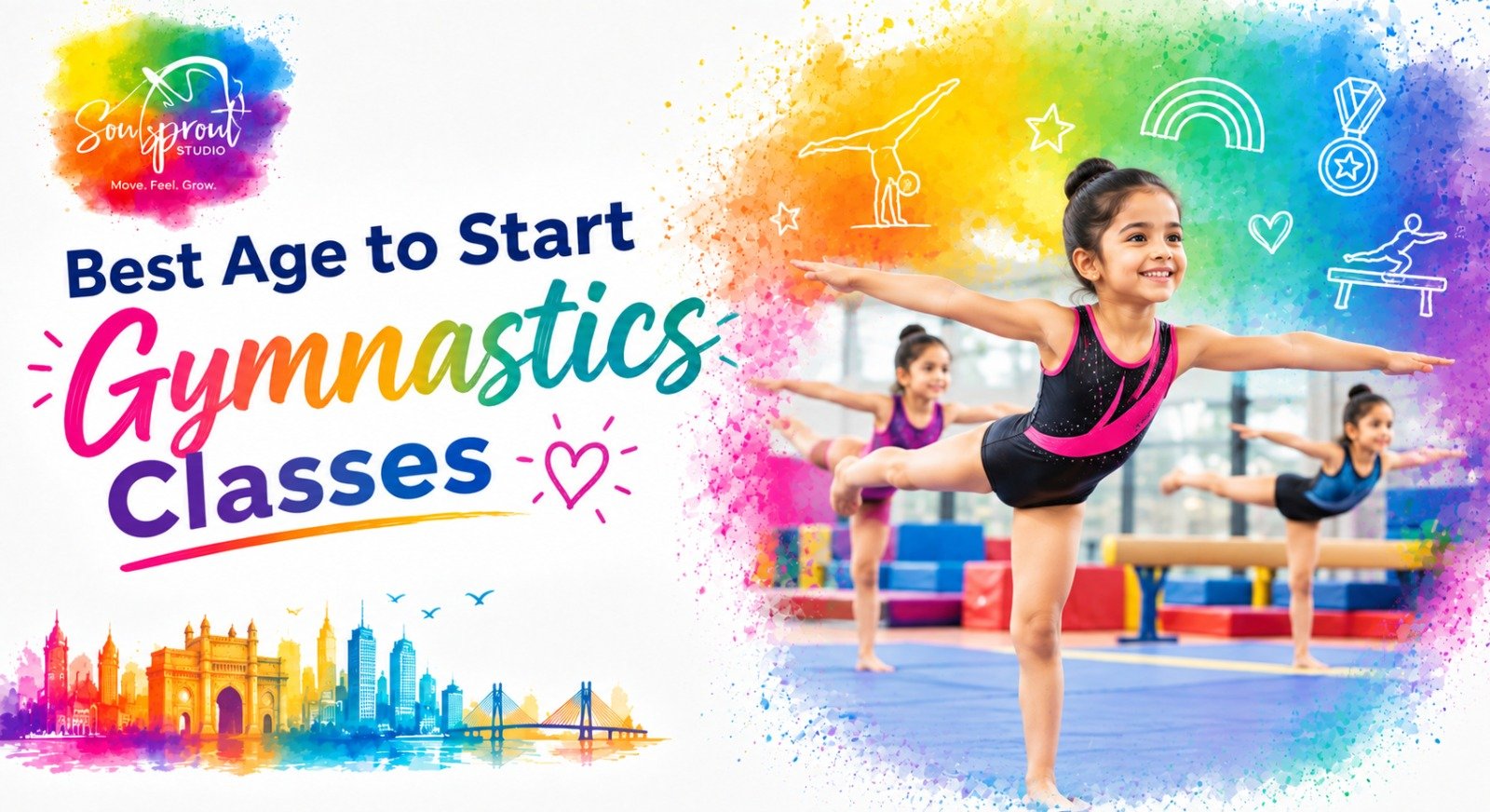
Gymnastics offers significant benefits for children, supporting the development of strength, flexibility, balance, coordination, and confidence. Parents often consider when their child should begin gymnastics classes and whether an early start has specific benefits. Children may begin gymnastics at various ages, according to their physical development, interests, and readiness to participate.
Age is not the only thing to consider when it comes to selecting the best age for your child to start an exercise programme, the setting they will practice in is of equal importance. At Soulsprout Studio, children learn about movement, build their strength and develop important skills in a positive environment.
What Is the Best Age to Start Gymnastics?
There is no universally ideal age for children to begin gymnastics. Many can join introductory movement classes between ages 2 and 4, and structured beginner gymnastics programmes are generally appropriate for children aged 4 to 6.
What is the best place to start? It will differ from child to child, based on their ability to coordinate, focus, and attention, comfort in a group environment, and whether they are willing to do small tasks or follow multiple steps.
Below is a guide for parents on what Gymnastics could look like at various ages.
1. Gymnastics for Toddlers: Ages 2–3
At this age, avoid formal skill training and think play and fun. Jumping crawling balancing on beams and over soft objects, tumbling on mats and climbing are all great for working those early motor skills.
Simple instructions, as well as being able to take turns and interact with other children, could be introduced in class. Younger toddlers may be helped by parental involvement as they settle into their new surroundings.
To encourage movement and build children’s confidence and awareness of their bodies.
2. Preschool Gymnastics: Ages 3–5
From age 3-5, most children are able to take directions well, to enjoy structured play and to develop better co-ordination. A time to introduce basic gymnastics by way of games balancing jumping and working with simple movement challenges.
Classes give children practice in co-ordination, flexibility, and spatial awareness. They may also teach your child about patience, listening, and taking turns.
At Soulsprout Studio, mums, and dads can search for age-appropriate programmes that encourage children to learn through movement while keeping safety and enjoyment at the centre of the experience.
3. Beginner Gymnastics: Ages 5–7
Could your young gymnast be ready for a class? Between the ages of 5 and 7, children are increasingly ready for more organized beginner classes. They can begin to build up the basics of gymnastics and hone balance, practicing soft landings, all with the expert guidance of a class instructor.
At this point, teachers are able to teach skills at the level the child is working on, rather than leaving all children at the same level.
It is a good way to teach children about discipline, persistence, and confidence as they learn different skills and masters new moves, reaching the next level in their performance as they go.
4. Starting Gymnastics After Age 7
A child can always begin recreational gym membership at any age. Those that are over the age of 7 can join a beginners class and learn at their own speed, increasing strength, flexibility, and coordination.
For some children it takes a little longer to develop a love for gymnastics. With time and patience they can continue to develop new skills with the right coaching and realistic goals.
Avoid competing with children who began earlier; parents should go for a programme that aligns with their present ability.
Benefits of Starting Gymnastics at the Right Age.
What are the benefits of gymnastics? Gymnastics brings various benefits when activities are suitable for the age and ability of the child.
Improves physical fitness: Climbing, jumping, balancing, and floor exercises help develop strength, flexibility, and coordination.
Builds confidence: children gain a feeling of accomplishment from learning a new movement and will be more willing to participate in other novel activities.
Builds discipline: children learn good habits through obeying orders, practicing movements, and waiting for their turn.
Promotes social development: through group instruction children can make friends, learn to work together and respect each other.
Encourages body awareness: through the sport, children learn to control their bodies, improve their balance and better understand what their bodies can do.
These advantages can aid in every child’s development, but each kid develops at their own unique pace.
How to Know If Your Child Is Ready for Gymnastics.
The age of a child is just one factor to consider when choosing gymnastic classes. Parents need to see if their little one is physically active, if they can take part with added help and if they are open to trying new routines.
Select a class with qualified instructors and appropriate equipment, use clean practice surfaces and follow safe rules. Toddlers should be closely monitored and any skills performed at height, upside-down, or with advanced movement should be done under supervision.
Don’t force children into competitive training before they are ready. Leisure classes provide a safe way to get started.
How to Choose the Right Gymnastics Classes
Inquire about class sizes Instructors Accommodating different age groups, Safety Measures and activities offered questions to consider before you sign up for a class include how many children are in each class, and what the age requirements are. Find out about the class content and if there’s a free trial class so that you can judge if your child will be comfortable with the style of teaching.
Select a studio that focuses on personal growth, allows room for questions, and is fun. Kids are more likely to be physically active when they are having fun, not feeling threatened.
Explore ideas for parents looking for children’s, activity, programmes, or about how to get their children moving, building confidence and good habits Soulsprout Studio.
Conclusion:
What’s the best age to start Gymnastics? The answer is determined by the child’s level of interest and readiness. While small children can be introduced to basic body movements as a part of their play, preschoolers can be introduced to classes and older children can learn basic gymnastics skills.
Your main priority should be safety, expert instruction and fun. Age is just a number and gymnastics offers something for all ages with the proper instruction.
Should you be interested in having your little one try out gymnastics, just visit our website to discover the available options for his/her age here at Soulsprout Studio and watch your child get started into an active life with lots of confidence.
Comments are closed