
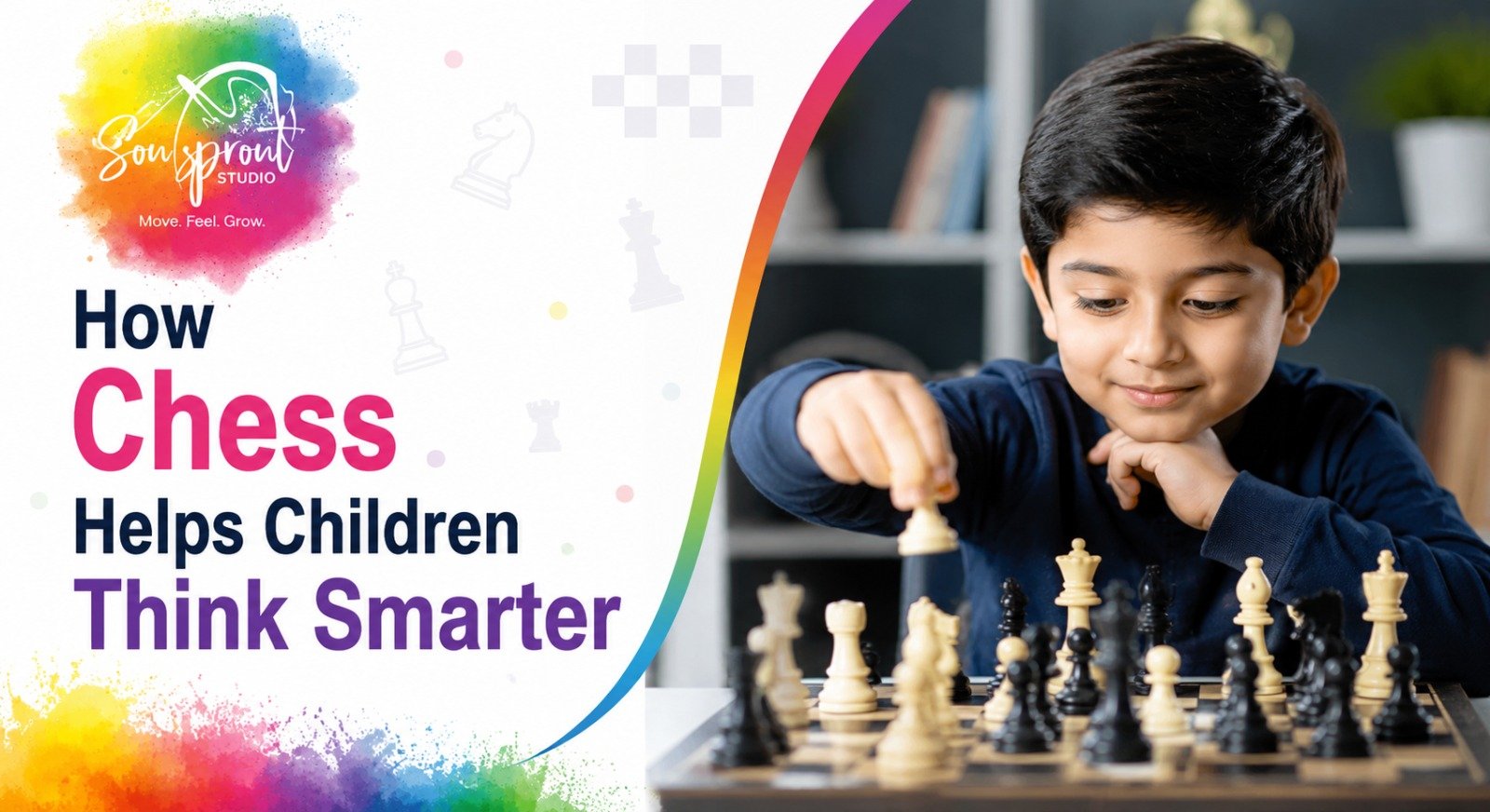
Soulsprout Studio considers that children learn best when the learning process is fun, engaging and meaningful. Chess is one such activity that is fun, yet it teaches important skills. A child, from planning the next move to finding solutions on the chessboard, is continuously being encouraged to think, stay focused and make decisions based on the available information.
Soulsprout Studio introduces children to various activities through which they can develop in their entirety and one such activity can be chess. You might think it’s just about winning or losing the game, but in reality it’s about learning patience, being able to solve problems, having the ability to concentrate, remembering and thinking strategically. These are capabilities which children can apply not only at school but also in their daily life.
1. Chess helps kids learn how to Solve problems
It is similar for all the positions of a chess game that we face new puzzles at every stage. The child first has to recognize the situation on board, then figure out the range of his options, and at times he has to choose the right plan among the several possible ones. He gains experience that a problem can actually have many different solutions according to the situation.
With this skill of problem-solving he has a chance to tackle math lessons play, and daily work in a more determined, self-confident manner.
2. It encourages Child thinking
Through chess, little kids get the chance to understand the concept of not stopping at their immediate next play. For instance, when about to make a move, kids will ask themselves: “What if this is done by my opponent?”, “What is the reaction after that?”
Developing the habit of planning several moves ahead through the game could be of great help to your children in understanding the outcome of their actions and making smart choices. Rather than jumping straight into actions, they learn to take a breath, weigh their alternatives, and then act.
3. Chess Enhances focus
During chess, kids have to follow the movements on the board and recall previously played parts. Any minor distraction could be the difference between losing and gaining.
By consistently engaging in chess play, that means, kids will develop and maintain their attention for longer duration. This skill of focusing can become quite important while reading, studying textbooks, doing homework or picking up any new activity.
4. Chess develops Patience
Very often, kids just can’t wait; they expect everything to happen fast and to be done without any effort. But the game of chess is a great vehicle that teaches them to wait for something good because it doesn’t come fast most of the time. For instance, you rarely play your best move as the first one after a chess problem is presented.
Besides teaching patience, the game of chess gives young ones a chance to put their skills to good work by slowing down the pace, being attentive, paying attention to the details and of course, choosing a good timing. This habit eventually leads to patience and control of one’s reactions.
5. Chess games help kids in Memory
As a chess player, one would have to remember the moves of various chess pieces, know the most common patterns, and remember former strategies and their consequences. With experience, children begin making good moves based on patterns and they can quickly identify certain positions as well.
If a person combines a high level of memory and an exceptional eye for details, s/he will surely be able to use and process information very effectively.
6. It Encourages Strategic Thinking Playing chess teaches the kids that a great move is not just a single move. It’s usually several small moves combined that eventually get their hands on the trophy.
This fosters strategic thinking or the capacity to identify a goal, think of what is at one’s disposal, and then gradually work toward an outcome.
7. Chess Builds Confidence
When kids manage to crack a tough chess problem themselves or when they come up with a clever idea and then win their game because of that, they feel really proud of themselves. But even if they lose, there are things to be learned.
Children gradually come to the realization that they should not shy away from analyzing their own error, figuring out what the problem was, and trying a different method again. This in turn can instill a proper mindset on failure and continuous self-improvement into the individuals.
8. Learning Chess with Soulsprout Studio
Soulsprout Studio’s approach to learning through activities like chess helps to widen a child’s learning horizons. Besides teaching how to win, the emphasis is really on fostering curiosity creativity concentration, and independent thinking.
Learning chess can also help a child gain new knowledge and skills in a relaxed atmosphere.
Conclusion
What makes chess special for kids is that it combines enjoyment and education. It gets them to think strategically and solve puzzles, while improving their ability to focus, retain information, acknowledge errors, recover, and make rational decisions.
If a child learns chess in an enjoyable setting, they’re not only getting to know a fun game, but also developing mental processes that will be advantageous to them from early years onward. At Soulsprout Studio, you can count on the chess sessions to be a delightful addition to your child’s quest of growing into a questioning, brave, and considerate individual.
Comments are closed